
Open and closed-cell · Bakersfield, CA
Spray Foam Insulation in Bakersfield, CA
Open and closed-cell foam that seals and insulates in one pass, for commercial buildings, shops and homes.
- 39 yrs
- In business
- 40+
- Cities served
- 4.8
- Google rating
- Licensed
- & insured
One spray foam application, sealed and insulated.
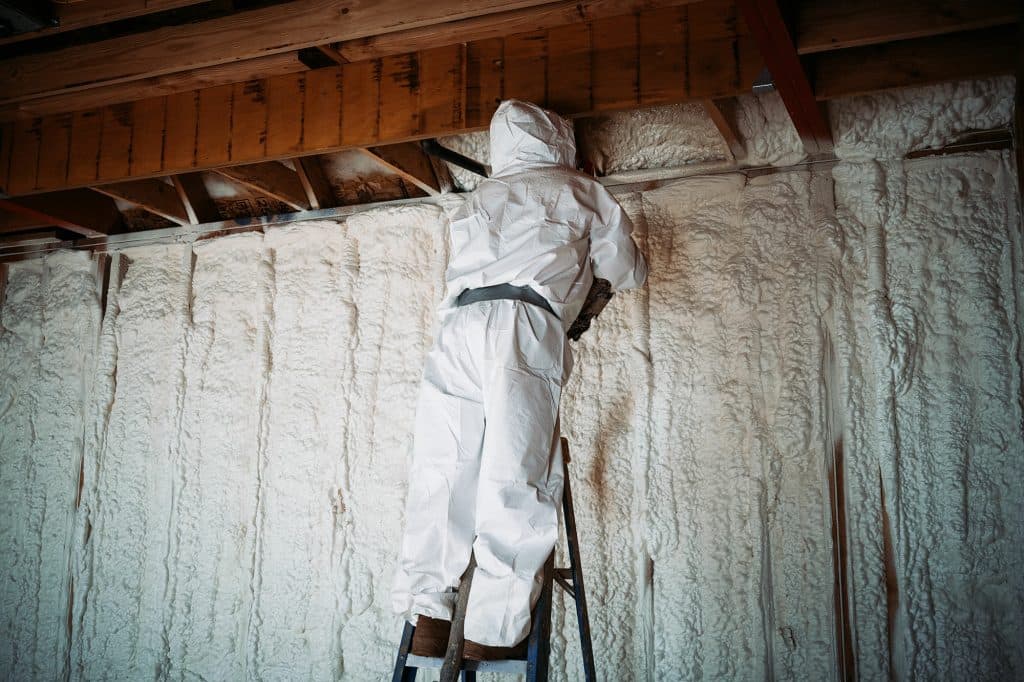
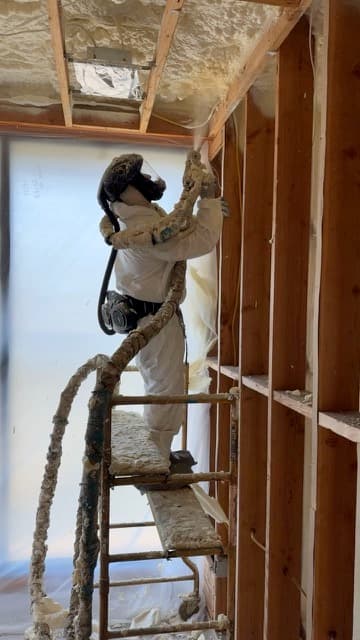
Spray foam does two jobs at once: it insulates and it air-seals, closing the gaps that batts and blown-in miss. A.S.I. applies open and closed-cell spray foam in Bakersfield and across Central California, for the buildings where a tight, continuous envelope actually matters.
Open-cell or closed-cell: which your building needs
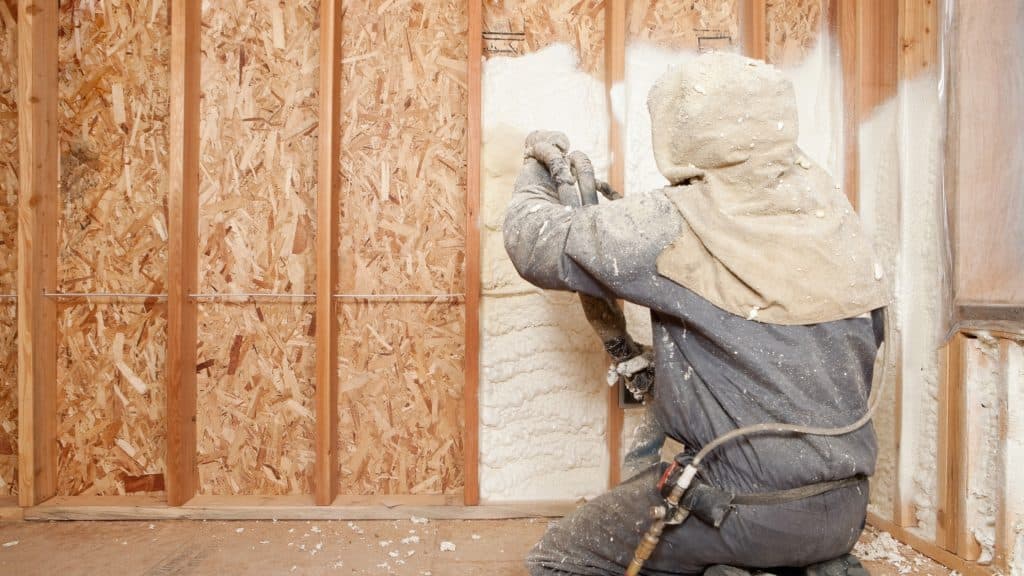
Open-cell foam is light, soft and vapor-open. It expands to fill odd cavities, insulates at roughly R-3.5 to R-3.8 per inch, and is very good at deadening sound, which is why it shows up in custom homes, offices and studios. Closed-cell foam is dense and rigid. It insulates at roughly R-6 to R-7 per inch, acts as a vapor retarder at normal thicknesses, sheds water, and adds stiffness to the wall or roof it is sprayed on. That makes it the choice for metal buildings, cold storage, roof decks, crawl spaces and anywhere condensation or moisture is the real problem. Plenty of jobs use both: closed-cell where the building meets weather or cold, open-cell where you want sound control and cost efficiency. We walk the building, look at what it is used for, and specify the foam, the thickness and the coverage in writing before anyone sprays.
How a spray foam job runs.
Prepared properly, applied cleanly, cured right.
Assess
We confirm the building, the goal, and whether open or closed-cell fits best.
Prep & mask
Surfaces are prepped and surrounding areas protected before any spray.
Apply
Foam is applied to spec for a continuous, sealed thermal envelope.
Inspect
We check coverage and depth, then leave the site clean.
Where spray foam earns its keep.
The buildings and facilities where a sealed, continuous envelope pays off most.
Spray foam in Bakersfield's heat
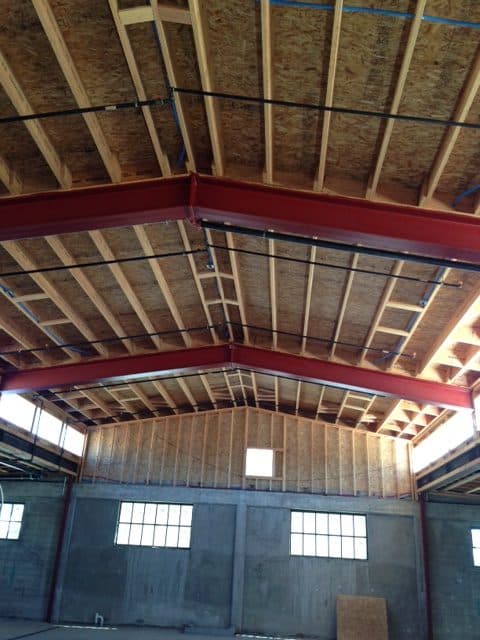
Bakersfield averages more than 2,200 cooling degree days a year, and July alone accounts for nearly 600 of them. Fiberglass slows heat moving through a wall, but it does nothing about air leaking around it, and leaking air is where a lot of cooling money goes. Spray foam sticks to the framing, deck or panel and fills every gap, so the insulation and the air seal arrive in the same pass. On metal roofs and walls it does a second job: it keeps warm, moist air off cold steel, which is what causes condensation, drips and rust. In attics it can move the insulation up to the roofline so ducts and equipment sit in conditioned space. The California Building Code requires foam in occupied space to be covered by a thermal barrier, typically half-inch gypsum board, and foam in attics and crawl spaces to have an ignition barrier, with specific exceptions. We tell you what your building needs up front, so inspection is not where you find out.
What spray foam costs, and what you get for it
Spray foam is priced by the board foot, so cost comes down to the type of foam, the thickness, the square footage and how easy the space is to reach. Closed-cell costs more per inch than open-cell and does more per inch. Prep, masking, removal of old insulation and any required barrier coating are part of the price too. What you get for it is insulation and an air seal in one step, no settling or sagging over time, and on metal and cold buildings an end to condensation. We give you a free written quote that lists the foam, the thickness and the area, so you can compare it fairly with any other bid. One of the jobs we are proudest of is Bishop's Peak Elementary in San Luis Obispo, where we sprayed closed-cell foam under the roof of a 9,386-square-foot gym.
Spray foam insulation questions.
What owners and builders ask before they commit.
Open-cell or closed-cell?
It depends on the job. Closed-cell adds R-value and acts as an air and moisture barrier; open-cell is lighter and great for sound. We help you pick the right one.
How much does spray foam insulation cost?
It depends on the foam type, the thickness you need and how easy the space is to reach. We walk the building and give you a free written quote with the foam, thickness and square footage spelled out, so you can compare it fairly.
Is spray foam good for metal buildings?
Yes. Closed-cell foam seals and insulates metal structures, controls condensation, and adds rigidity, which is why it's a go-to for shops and warehouses.
Can you spray cold storage?
Cold storage is one of our specialties. Closed-cell foam delivers the continuous, sealed envelope these facilities need.
Do you do residential spray foam?
Yes. We insulate custom homes, attics, crawl spaces and additions as well as commercial buildings, across Bakersfield and the surrounding area.
Can spray foam go over old insulation?
Not usually. Foam has to bond to the framing or deck, so old batts or blown-in insulation come out first. We handle the removal as part of the same job.
Does spray foam need to be covered?
In most occupied spaces, yes: building code requires a thermal barrier such as half-inch drywall, and an ignition barrier in attics and crawl spaces, with some exceptions. We include what your building needs.
Do you work outside Bakersfield?
Yes. Crews work across Kern County, the Central Coast from San Luis Obispo to Santa Barbara, and Ventura County.
Related services.
The work that usually comes up on the same kind of job.
Tell us about your project.
- Reply within 1 business day
- Free estimates
- No obligation